


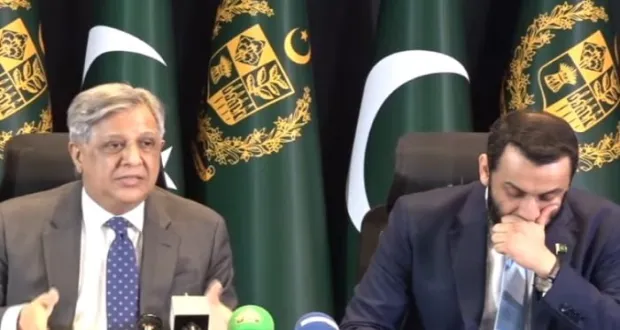
ISLAMABAD: Federal Law Minister Azam Nazeer Tarar said on Tuesday that the imposition of emergency and governor’s rule in Khyber Pakhtunkhwa (KP) did not amount to the removal of an elected government, asserting that the Constitution provides a legal framework for such measures.
“ No elected government has been overthrown,” Tarar said while briefing international media in Islamabad alongside Information Minister Attaullah Tarar.
He maintained that the Constitution empowered the federal government, prime minister and president to take appropriate decisions when circumstances warranted such action.
The statement comes after President Asif Ali Zardari declared an emergency and imposed governor’s rule in KP on the advice of Prime Minister Shehbaz Sharif, citing the deteriorating security situation in the province.
According to a statement issued by the President Secretariat’s Media Wing on October 11, the decision followed recommendations from the federal cabinet, advice from the prime minister and reports from relevant security institutions regarding law and order. The statement also referred to the failure of talks between federal representatives and the provincial leadership over the security situation.
The Pakistan Tehreek-e-Insaf (PTI), which has governed KP since 2013, strongly opposed the decision and announced plans to challenge it in court.
Explaining the constitutional grounds for the move, Azam Nazeer Tarar said the emergency and governor’s rule had been imposed under Articles 232 and 234 of the Constitution.
He described the Constitution as the country’s supreme framework for governance, providing procedures to address exceptional circumstances.
The law minister said Pakistan had been confronting terrorism for decades, adding that militant violence in KP had risen significantly in recent years. He noted that various government institutions had provided terrorism-related data to the federal government.
According to Tarar, the reports were reviewed at the Prime Minister’s Office before the decision was made.
He said the president could proclaim an emergency on the prime minister’s advice, with the prescribed constitutional process involving the satisfaction of the president.
Rejecting allegations that the move was politically motivated, Tarar argued that if political considerations had driven the decision, the government could have taken such action much earlier.
Information Minister Attaullah Tarar said the federal government had repeatedly tried to reach an understanding with the PTI and the KP government on a coordinated strategy to combat terrorism, but alleged that Chief Minister Sohail Afridi had rejected the proposed arrangement.
“Our only agenda was non-political,” the information minister said, stressing that the centre wanted a unified approach to counterterrorism.
He maintained that the federal government had no objection to the PTI pursuing its political activities or presenting its other demands. However, he said, the government wanted all stakeholders to agree on measures to address militant violence.
Tarar said several rounds of negotiations and discussions had been held to convince the PTI and provincial authorities to adopt a joint strategy.
He accused the KP chief minister of showing reluctance to implement coordinated counterterrorism measures, describing the provincial administration as unwilling to cooperate with the federal government on the issue.
The information minister pointed to the National Action Plan and meetings of high-level committees as key mechanisms for coordinating the country’s counterterrorism efforts.
“Why was one province reluctant to convene meetings of these high-level committees?” he asked.
Tarar argued that Pakistan could not pursue separate policies on foreign affairs and counterterrorism, saying the country needed a consistent national approach to security challenges.
He said Islamabad wanted an end to terrorist safe havens and called for preventing Afghan territory from being used to launch attacks against Pakistan.
“It is not acceptable for the federal government to ask Afghanistan to stop terrorism while the provincial government follows a different policy,” he said.
The minister also attributed the widening gap between the federal and provincial governments to the alleged absence of apex committee meetings in KP.
Expressing concern over what he described as the provincial government’s lack of commitment to counterterrorism, Tarar alleged that provincial authorities had repeatedly shown sympathy towards militants.
He further claimed that militants had established an informal presence within administrative structures in southern KP districts and accused the provincial government of failing to take effective legal action against them.
The post No elected government ousted in KP, says law minister on Governor’s rule appeared first on Karachi News.