


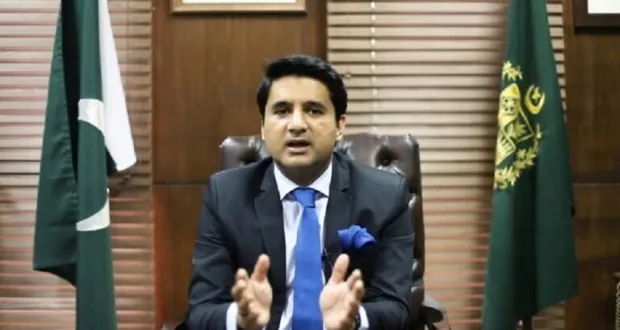
QUETTA: The Government of Balochistan on Saturday shared details of a confessional statement by Rahima Bibi, wife of Dalbandin resident Manzoor Ahmed, during a press briefing in Quetta, exposing an alleged organized network involved in militant recruitment and facilitation.
In her statement, Rahima Bibi revealed that her husband had assisted a female suicide attacker linked to the Balochistan Liberation Front (BLF), who later targeted a Frontier Corps (FC) camp in November 2025.
She disclosed that during their marriage, suspicious contacts and activities tied to militancy were taking place inside their home, suggesting that such networks are increasingly operating from within domestic settings and using family structures as cover.
According to her account, the attacker, identified as Zarina Rafiq, had stayed at their house for a period, indicating that ordinary residences were being used as safe locations for individuals involved in planned attacks.
Rahima Bibi further stated that the woman was later transported to Afghanistan, where she underwent training before returning to Pakistan to carry out the attack—highlighting concerns over cross-border support systems aiding militant operations.
The statement also pointed out that her mobile phone number was used by her husband to maintain communication with extremist elements, reflecting the use of personal identities to hide operational coordination.
Officials said that militant groups are increasingly targeting women through coercion, psychological manipulation, and organized recruitment strategies, marking a noticeable shift in tactics in Balochistan.
Security assessments suggest that recruitment and radicalization are carried out in stages, with vulnerable individuals influenced through narratives, while groups such as BLA and BLF manage training and operational deployment.
Analysts noted that certain platforms, including those associated with BYC, may create an environment that influences susceptible individuals, later exploited by recruiters.
Authorities added that when operations fail or suspects are apprehended, such cases are sometimes portrayed as “missing persons” incidents to shape public perception.
Security officials also emphasized that social, emotional, and family-related vulnerabilities are deliberately exploited to facilitate recruitment, shelter, and movement of operatives.
They reiterated that cross-border infrastructure in Afghanistan remains a key enabler of militant activity in Balochistan and Khyber Pakhtunkhwa, with groups like BLA, BLF, and TTP reportedly maintaining training and logistical networks there.
Former caretaker prime minister Anwaar-ul-Haq Kakar observed that militant organizations are now pursuing a dual approach, combining violence with narrative campaigns aimed at influencing public opinion.
Balochistan Home Department spokesperson Babar Yousafzai warned that such networks exploit women and societal weaknesses to further their agendas and disrupt social harmony.
The DIG of the Counter Terrorism Department (CTD) in Quetta stated that these networks operate through multiple interconnected layers, including recruiters, facilitators, trainers, and handlers, making them complex and transnational in nature.
Officials and provincial representatives stressed that the use of women in such activities goes against Baloch cultural traditions, which emphasize respect and protection for women, as well as broader religious and ethical principles.
The government and security agencies affirmed that actions against these networks are ongoing, including intelligence-based operations, forensic analysis, and legal proceedings to bring those involved to justice and prevent further exploitation.
The post Confessional statement in Quetta uncovers terror recruitment network, Cross-Border links appeared first on Karachi News.